

Hyrox has taken Glasgow by storm. The race that blends running with functional fitness has gone from niche event to sold-out spectacle, and the March 2026 event at the SECC proved once again that this city is all in. Whether you watched from the sidelines, competed for the first time, or you're just hearing about it now and wondering what all the fuss is about - this guide is for you.
At Everyday Athlete Gym in Port Dundas, we've helped hundreds of members go from "I could never do that" to crossing the finish line with a grin on their face. And we're going to walk you through exactly how to get there yourself.
What Is Hyrox, and Why Is Everyone Talking About It?
Hyrox is a global fitness race designed for everyone - not just elite athletes. That's the part most people miss. Unlike a marathon or an obstacle course race, Hyrox follows a fixed format every single time, so you always know what you're training for.
The format is simple: 8 rounds of a 1km run, each followed by a functional workout station. You complete all 8 stations, and you're done. No surprises, no mystery obstacles, no swimming through mud. Just honest, hard work.
Hyrox has been growing rapidly across Europe, and Glasgow has become one of the standout host cities. The SEC venue is world-class, the atmosphere is electric, and the Scottish crowd brings an energy that's hard to beat.
The 8 Hyrox Workout Stations (Explained Simply)
Here's what you'll face on race day, in order. Every station is the same at every Hyrox event worldwide, which means your training can be laser-focused.
Station 1: SkiErg (1,000m)
A standing machine that mimics a cross-country skiing motion. It hammers your arms, shoulders, and core. The trick is pacing yourself early - this is station one and your arms will need to last all day.
Station 2: Sled Push (50m)
Push a weighted sled across the floor. Men push 152kg, women push 102kg. Short bursts of all-out effort work best here. This one is about leg drive and staying low.
Station 3: Sled Pull (50m)
Attach a rope to the same sled and pull it back. This tests your grip, back, and hamstrings. A strong pulling position makes all the difference.
Station 4: Burpee Broad Jumps (80m)
Exactly what it sounds like. Burpee, then jump forward for distance. Repeat for 80 metres. This is where your engine gets tested. Consistent pacing beats going out too fast.
Station 5: Rowing (1,000m)
Get on the rower and knock out a kilometre. If you've never rowed before, technique matters more than brute force. A smooth, powerful stroke will save you energy for the second half of the race.
Station 6: Farmers Carry (200m)
Pick up two heavy kettlebells (2x24kg for men, 2x16kg for women) and walk 200 metres. Grip strength, core stability, and mental grit. The weight isn't the hard part - the distance is.
Station 7: Sandbag Lunges (100m)
Throw a sandbag over your shoulder (20kg men, 10kg women) and lunge for 100 metres. This is the station that breaks most first-timers. Your quads will be screaming, and the finish line is close enough to taste. Keep stepping.
Station 8: Wall Balls (100 reps)
The final station. Squat, then throw a medicine ball to a target on the wall, 100 times. Men use a 6kg ball, women use a 4kg ball. It sounds straightforward until you're 70 reps in with 7km of running and 7 stations in your legs.
How Long Does a Hyrox Race Take?
For first-timers, finishing between 75 and 100 minutes is completely normal. Competitive athletes aim for 60-70 minutes, and the elite finish in under 55. But here's what matters: finishing. Your first Hyrox isn't about time - it's about proving to yourself that you can do something extraordinary.
Most people who sign up for their first Hyrox don't believe they'll finish when they register. Nearly all of them do.
How EDA Classes Prepare You for Hyrox
Here's the thing about Hyrox training in Glasgow - you don't need a separate "Hyrox programme" to get race-ready. If you're training at Everyday Athlete, you're already building the exact fitness Hyrox demands.
Functional Fitness Classes
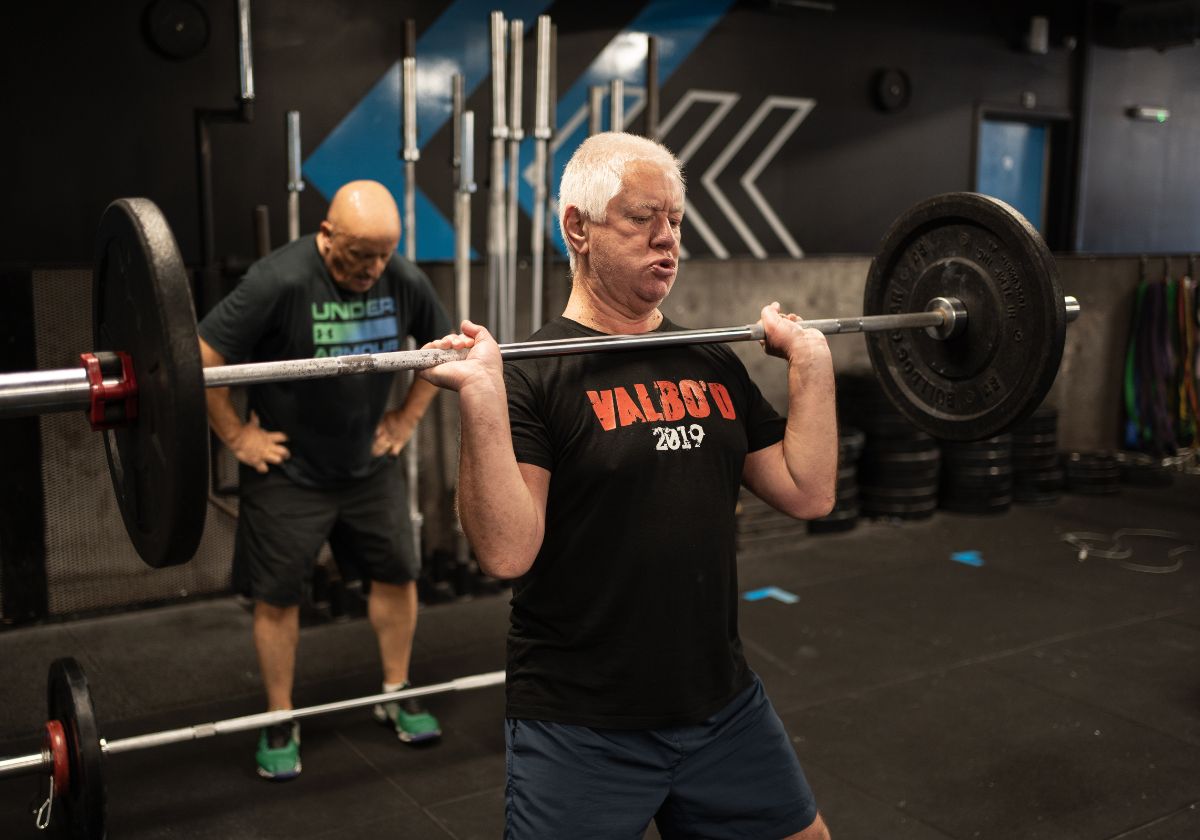
Our EDAFit classes are the backbone of Hyrox preparation. Every session builds functional strength, cardiovascular endurance, and the mental toughness to push through discomfort. Wall balls, rowing, sled work, farmers carries - these aren't special Hyrox exercises. They're movements we programme every single week.
The coached format means your technique stays sharp even when you're tired, which is exactly what happens on race day.
Muay Thai and Boxing
Our combat classes build something that's hard to train in a traditional gym - the ability to keep moving when your body wants to stop. The cardio conditioning from pad work and bag rounds translates directly to those 1km runs between stations. Plus, the footwork and core engagement helps with every single Hyrox station.
Personal Training
If you want a training plan built specifically around your Hyrox goal, our PTs can design a programme that targets your weaknesses. Struggling with the SkiErg? Dreading the lunges? A few focused sessions can make a massive difference.
A Sample Hyrox Training Week at EDA
Here's what a solid week of Hyrox preparation might look like using EDA's class timetable. This suits someone who's 8-12 weeks out from race day.
Monday: EDAFit Class
Start the week with a full-body session. Our Monday programming typically hits a strength element plus a conditioning piece - perfect for building the base fitness Hyrox demands.
Tuesday: Running (On Your Own)
A 5-8km easy run. Nothing fancy. Hyrox involves 8km of total running, so you need a solid aerobic base. The Glasgow canal path from Port Dundas is flat, quiet, and ideal for steady-state runs.
Wednesday: EDAFite Class
Mid-week session. Focus on moving well, even when the workout gets spicy. This is where you build the engine that carries you through stations 4-8 when fatigue sets in.
Thursday: Muay Thai or Boxing Class
Conditioning and mental grit. Three rounds on the pads when your arms are heavy is exactly the kind of discomfort tolerance you need for the back half of a Hyrox race.
Friday: Rest or Active Recovery
Walk, stretch, foam roll. If you have access to Thermal (our on-site wellness room), a bio-stacking session combining sauna, cold plunge, and red light therapy is the best recovery you'll find in Glasgow.
Saturday: EDAFit Class + Hyrox Simulation
Hit the Saturday class, then stay for 20-30 minutes of Hyrox-specific practice. Rotate through 2-3 stations (sled push/pull, wall balls, SkiErg) at race pace. This teaches your body what race day intensity feels like.
Sunday: Long Run
Build to 8-10km over the weeks. This doesn't need to be fast - it's about time on your feet and teaching your legs to keep going.
The Biggest Mistakes First-Time Hyrox Athletes Make
We've seen plenty of members go through their first Hyrox journey, and the same mistakes come up every time. Avoid these and you'll have a much better race.
Going Out Too Fast on the Runs
The first 1km run feels easy. You're fresh, the crowd is loud, and adrenaline is pumping. The problem is that you have seven more runs ahead of you. Start slower than you think you should. Your body will thank you at station 6.
Neglecting Grip Training
Sled pull, farmers carry, wall balls - your grip takes a hammering across the race. If you've never done a 200m farmers carry with heavy kettlebells, start practising now. Dead hangs, heavy carries, and thick-grip work all help.
Ignoring the Transitions
The time between finishing a run and starting a station adds up. In your training, practise moving straight from a run into a workout without sitting down or catching your breath. Transition practice shaves minutes off your total time.
Skipping Recovery
Hyrox training is demanding. If you're running four or five sessions a week plus extra running, your body needs proper recovery. Sleep, nutrition, and active recovery aren't optional - they're part of the programme.
Recovery Tips for Hyrox Training
Your training is only as good as your recovery. Here's how to keep your body in shape during a Hyrox training block.
Sleep
Aim for 7-9 hours. This is when your muscles repair and your nervous system resets. No supplement or recovery gadget comes close to the impact of consistent, quality sleep.
Nutrition
Eat enough. Hyrox training burns serious calories, and under-eating will tank your performance and increase injury risk. Prioritise protein (1.6-2g per kg of bodyweight), eat plenty of carbohydrates around training, and stay hydrated.
Active Recovery and Bio-Stacking
Light movement on rest days keeps blood flowing and reduces stiffness. And if you want to take recovery seriously, Thermal is right here in the same building. A session combining red light therapy, Finnish sauna, cold plunge, and halotherapy can reduce delayed onset muscle soreness significantly and get you back to training faster. It's what many of our Hyrox athletes use during heavy training blocks.
Mobility
Spend 10-15 minutes daily on hip, ankle, and thoracic mobility. Tight hips make lunges harder. Stiff ankles make wall balls harder. A little daily work prevents a lot of race day pain.
How Long Do You Need to Train for Hyrox?
If you're already training consistently (3-4 sessions a week at a place like EDA), 8-12 weeks of focused preparation is enough for your first Hyrox. You already have the fitness base - you just need to add running volume and practise the specific stations.
If you're starting from scratch, give yourself 16-20 weeks. The first 8 weeks build your general fitness, and the final 8-12 weeks shift towards Hyrox-specific training.
Either way, the sooner you start, the more confident you'll feel on race day.
Can You Do Hyrox as a Team?
Absolutely. Hyrox offers Doubles and Relay categories alongside the individual race. In Doubles, you and a partner alternate stations. In Relay, a team of four splits the work. These categories are brilliant for first-timers because the workload is shared and the experience feels less intimidating.
We've had plenty of EDA members do their first Hyrox as a pair, then come back to race solo the next time. It's a great way to get the race day experience without carrying the full load alone.
Why Train for Hyrox at Everyday Athlete in Glasgow?
You could train for Hyrox at any gym. But here's what makes EDA different:
Every class is coached. That means someone is watching your technique, pushing you when you need it, and making sure you're training smart. When you're tired on race day, good movement patterns kick in automatically - but only if you've practised them under coaching.
We have all the equipment. SkiErgs, rowers, sleds, sandbags, wall ball targets, heavy kettlebells. You won't need to improvise or make do.
The community carries you. Training for something like Hyrox alongside people who genuinely want you to succeed makes the hard days easier. You'll find training partners, share race day tips, and probably end up in a Doubles team before you know it.
Recovery is on-site. With Thermal in the same building, you can finish a tough session and walk straight into a private wellness room for sauna, cold plunge, red light therapy, and salt therapy. No other gym in Glasgow offers that.
And we're easy to get to. Port Dundas is minutes from the city centre with free parking on-site. No excuses.
Frequently Asked Questions About Hyrox Training in Glasgow
Do I need to be fit to start training for Hyrox?
No. You need to be willing to start. Our classes scale to every level, and you'll build fitness as you train. Most of our Hyrox finishers started with zero competitive fitness experience.
What if I can't run 8km yet?
That's fine. Most beginners can't when they first decide to do Hyrox. Your running builds over the training block. Start with whatever distance you can manage and add a little each week.
Is Hyrox harder than a marathon?
It's different. A marathon is a long, steady effort. Hyrox alternates between running and high-intensity functional work, so the challenge is managing your energy across varied demands. Many people find Hyrox more engaging because no two stations feel the same.
When is the next Hyrox event in Glasgow?
The March 2026 event at the SECC has just taken place. Keep an eye on the official Hyrox website for 2026/2027 dates - Glasgow is now a regular fixture on the calendar. Events are also held in Edinburgh, London, Manchester, and Birmingham if you want to race sooner.
How much does it cost to enter Hyrox?
Individual entries typically range from 80 to 120 pounds depending on how early you register. Doubles and Relay categories are slightly cheaper per person. Early bird pricing saves you the most, so register as soon as dates are announced.
Start Your Hyrox Journey Today
You don't need to be a certain level of fit. You don't need to have done a race before. You just need to turn up, train consistently, and trust the process. At Everyday Athlete, we'll give you the coaching, the equipment, the community, and the recovery tools to get you across that finish line.
Book your 7-day trial for just 15 pounds and start training for Hyrox in Glasgow the right way. Your future self will thank you for it.


Leave a comment
This site is protected by hCaptcha and the hCaptcha Privacy Policy and Terms of Service apply.